What does sisterhood sound like? STOMP, CLAP!
How does pride move? FLIP, FLAP!

Soul Step

7

Mother-daughter team Rhodes and McWilliams feature a mother-daughter duo in this energetic picture book rooted in the history of step. “Where me and Mama live, not many people look like us. Sometimes that makes Mama sad as can be,” begins the young Black narrator. When Mama’s stopped twice by cops who ask “if she lives in the neighborhood,” Mama dons her dancing boots and “gets to what she calls ‘steppin.’ ” Trying to learn more, the protagonist visits Mama’s sorority sister, who says “steppin’s roots go all the way back to slavery, but step didn’t pop until sisters and brothers went to college.” Other women in Mama’s life further define step as “sisterhood” and “a megaphone for our resistance.” Asked why it helps with frustration, Mama herself finally walks her child through the moves (“First, catch the rhythm. Feel it in your soul”).

In a striking color palette, Mukodiri Uchendu depicts the narrator seeking knowledge from Mama’s close circle—an act that underlines the book’s high-level exploration of Black culture, sisterhood, and step.

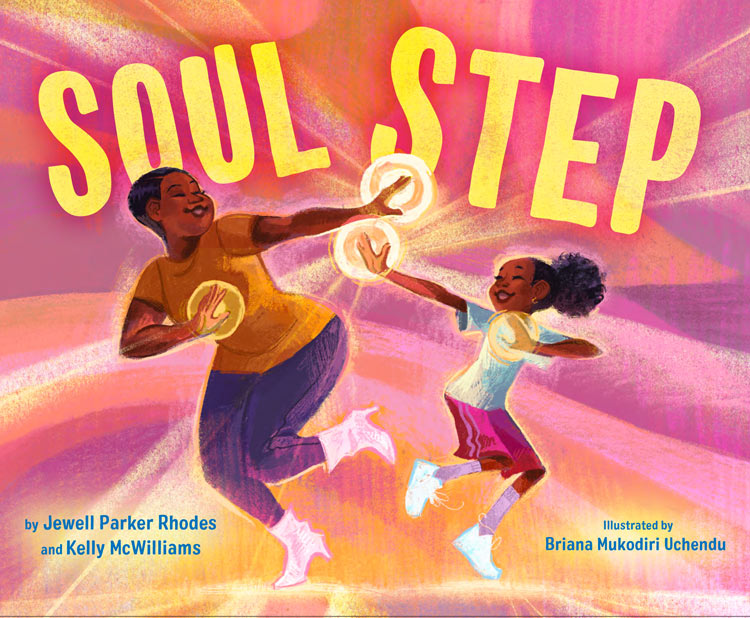
The cover of the book Soul Step, with a mom and child dancing and playing music together.
The young daughter from Soul Step, in a style that looks like a sticker

Honors & Accolades
for Soul Step

Finalist, Black Authors Matter Children’s Book Award

Best Books for Children Ages 3 – 5

2024, Amazon

Order Your Copy

Booklist

“Mother-daughter team Rhodes and McWilliams feature a mother-daughter duo in this energetic picture book rooted in the history of step… In a striking color palette, Mukodiri Uchendu depicts the narrator seeking knowledge from Mama’s close circle—an act that underlines the book’s high-level exploration of Black culture, sisterhood, and step.”

Horn Book

“Celebrating Black history and sisterhood, this story brings awareness to an art form rarely performed outside of African American communities. Like step, this tale should be enjoyed and shared… Uchendu’s digitally created illustrations convey a sense of perpetual motion.”

Publisher's Weekly

“Mother-daughter team Rhodes and McWilliams feature a mother-daughter duo in this energetic picture book rooted in the history of step. “Where me and Mama live, not many people look like us. Sometimes that makes Mama sad as can be,” begins the young Black narrator. When Mama’s stopped twice by cops who ask “if she lives in the neighborhood,” Mama dons her dancing boots and “gets to what she calls ‘steppin.’ ” Trying to learn more, the protagonist visits Mama’s sorority sister, who says “steppin’s roots go all the way back to slavery, but step didn’t pop until sisters and brothers went to college.” Other women in Mama’s life further define step as “sisterhood” and “a megaphone for our resistance.” Asked why it helps with frustration, Mama herself finally walks her child through the moves (“First, catch the rhythm. Feel it in your soul”). In a striking color palette, Mukodiri Uchendu depicts the narrator seeking knowledge from Mama’s close circle—an act that underlines the book’s high-level exploration of Black culture, sisterhood, and step.”

Kirkus

Rhodes and McWilliams have crafted a lively, rhythmic narrative, punctuated by onomatopoeia, that will have readers chanting along: “STOMP, CLAP, FLIP, FLAP, GO HARD, SNAP BACK!” Fluid illustrations accompany the text, which balances the heartache Black women and girls face with the triumph of sisterhood. Backmatter offers more information on step’s origins and continuing influence.
A joyful tribute to the ways in which Black women use culture and connection to both survive and thrive. “